
Baby Wearing - An Ancient Form of Caregiving
- Jungle Gym
- Feb 19, 2024
- 4 min read

Updated: Feb 25, 2024
This practice has been used for tens of thousands of years “Slings have been described as one of the very first pieces of technology” (Ward, et, al., 2017)
Worn mostly by the mother, however also worn by men, older children and family members. This practice is seen in many different cultures and each culture expressing it in their own unique way.
"Ojibwe, Navajo, Apache, Shoshone, Ute, Iroquois, Hopi and Lakota tribes" (R, Diana, et al., 2015-2023) tribes used cradleboards for sleep and carrying.

In Asia there are many variations and some were ornate with embroidery. In China families used a Mei Tai which is sometimes called the “origin of all baby carriers” (et, al. Ward, 2017), a rectangular piece of fabric with two shoulder straps and two straps for a hip belt. Silk of kimonos or kimono sashes were used in Japan. Indian women “tied babies into part of their saris”(Ward et al., 2017)

Mu Cang Chai Yen Bai, Vietnam.
Photo: Suriya99/Shutterstock
The Island of Borneo is one of many cultures who used rattan baskets. As well as some of the following cultures:
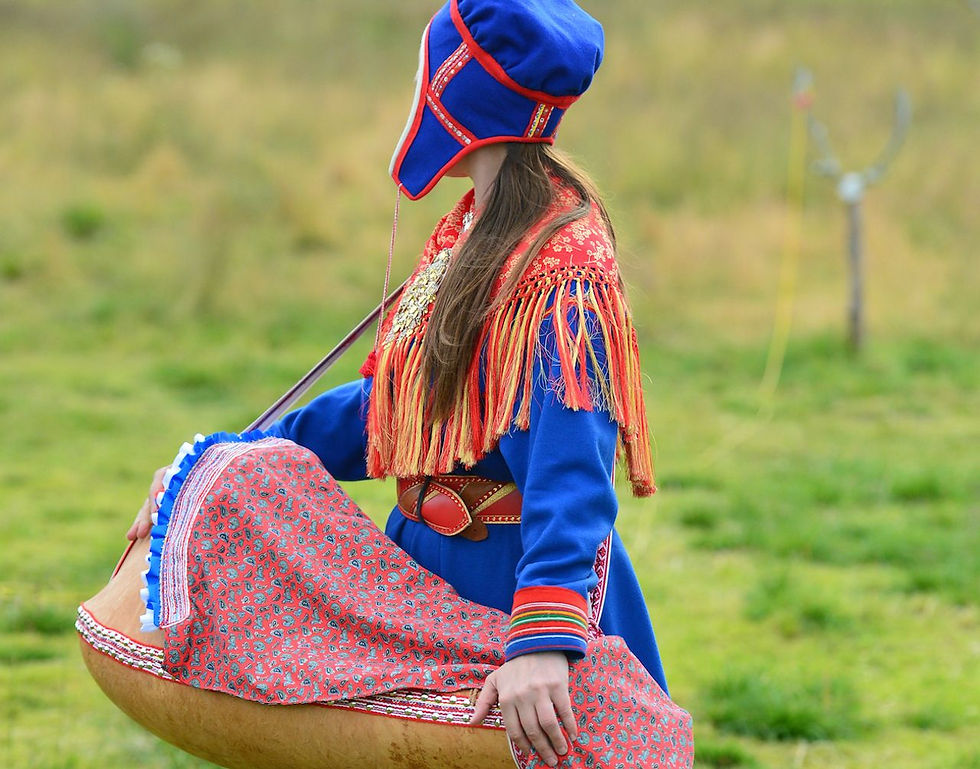
Nord-Norge (Northern Norway)
Photo: V. Belov/Shutterstock

Beni, Nepal
Photo: Michal Knitl/Shutterstock

PHOTO: FABIO TASHI/INSTAGRAM

African women used dress fabric.

(Guinea-Bissau, West Africa)
Photo: Peek Creative Collective/Shutterstock

(Mozambique, East Africa)
Photo: Vladislav T. Jirousek/ShutterstocK
"Inuit mothers wear their babies in their coats where both are kept warm. A special coat called an Amauti is used to securely hold the baby behind mother’s back." (R, Diana et al., 2020)


Cuzco, Peru
Photo: dani3315/Shutterstock
In Mexico they used a rebozo or ‘carrying cloth’. Wales a blanket was used by both men and women. Other known countries include: Peru, Germany, Turkey, and Greenland
Baby wearing allowed mothers to go about her daily tasks such as working in the fields, hunting, gathering, and nomads who would travel from place to place.

Nepal
Baby and mother are able to feel and hear each other's heart beat and encourages nurturing touch with closeness.
In the 1950s the use of strollers became the norm.
Ann Moore a nurse in the Peace Corps developed the “Snugli” in the 1960s inspired by mothers in Togo while working there. Later improving upon the design with “Weego” in the 1990s and bringing this practice back into the West. (Kallio et al., 2023)


“Our World Mother of Invention.” Home EN, www.rotary.org/en/our-world-mother-invention.
In 1985 this practice was continually popularized by pediatrician Dr. William Sears and his wife Mary Sears. The term “baby wearing” was coined by his wife Mary Sears. “Attachment parenting” is a term associated with baby wearing and coined by Dr. William Sears. (Ward et al., 2017)
Dr. William and his wife Mary Sears share many benefits through their own parenting experiences, as well as Dr. Sear’s many years of pediatrician practice. One I found particularly interesting: Dr. Sears says “Sling babies spend more time in the state of quiet alertness. This is the behavioral state in which an infant is most content and best able to interact with their environment. It may be called the optimal state of learning for a baby. Researchers have also reported that carried babies show enhanced visual and auditory alertness.”
(Sears et al., 2022)
For our purposes baby wearing supports functional movement sessions to support mother’s healing and reconnection to self while remaining close to her baby. As Dr. William describes our babies are learning through these sensory systems: vestibular (movement through spacial awareness), visual, and auditory. Encouraging bonding while meeting both the needs of baby and mother.
As I research the first baby wearing and as it became more popularized in the West. I’m in awe and appreciation of all the mothers and caregivers to walk before me. I’m grateful to see these hard working and traveling mothers that kept their children close to them. Forming healthy, strong connections and attachment as they went about their lives and tended to what was needed. I’m deeply inspired by the beauty and strength. Seeing these representations of motherhood makes me feel less alone.
This way of parenting continues to carry on through generations. The evolution of baby carrying and how that impacts the beautiful balance of parent and childhood feels significant to child rearing. Perhaps an evolution of parenthood in itself through seeking balance. Providing shelter and food, housekeeping, caring for multiple children, spouse and/or family. Being present and intentional. Learning, developing, instilling values. Traveling. Connecting to nature. Creating ease while maintaining connection. It’s something we’ve been working through and mulling over for 1000s of years. It shows me that we were never meant to walk or carry this gift alone, and there is beauty in balance.
Sources:
-Victoria Ward. “The History of Babywearing.” Babywearing UK 2017, www.babywearing.co.uk/the-history-of-babywearing/.
-“Origins of Baby Carriers.” 2017 Fidella, fidella.org/pages/origins-of-baby-carriers.
-Nikki Kallio. “Our World Mother of Invention.” Home EN. 2023 Rotary International. www.rotary.org/en/our-world-mother-invention.
-Sears, Dr. Bill. “Benefits of Babywearing.” Ask Dr Sears, 14 July 2022, www.askdrsears.com/topics/health-concerns/fussy-baby/baby-wearing/benefits-babywearing/.
-R, Diana. “Cultural Babywearing - Traditional Baby Carriers.” Wrap Your Baby, 10 Oct. 2020, wrapyourbaby.com/cultural-babywearing/.
Comments